Jeans and belt. The most common outfit combination on earth, and the one with the widest gap between "looks fine" and "looks great." The difference is not the jeans. It is the belt you put with them.
Jeans and belt is the most repeated pairing in the history of getting dressed. It is the first outfit most teenagers assemble on their own. It is the foundation of smart casual in most of the world. It is what eighty percent of the adult population is wearing right now, at this exact moment, in some form. And yet almost nobody talks about how to actually get this pairing right, because everyone assumes there is nothing to get right. You grab jeans. You grab a belt. You leave the house.
But the vegan belt you choose with jeans changes the entire energy of the outfit. A thin, polished dress belt with relaxed weekend denim looks like you raided the wrong section of your wardrobe. A chunky western buckle with slim dark jeans and a blazer looks like two outfits having an argument. And a cheap, cracking belt with any jeans at all looks like you have given up on the details entirely. The vegan belt with jeans is not a default pairing. It is a decision. And the right decision is the difference between an outfit that looks pulled-together and one that looks pulled-on.
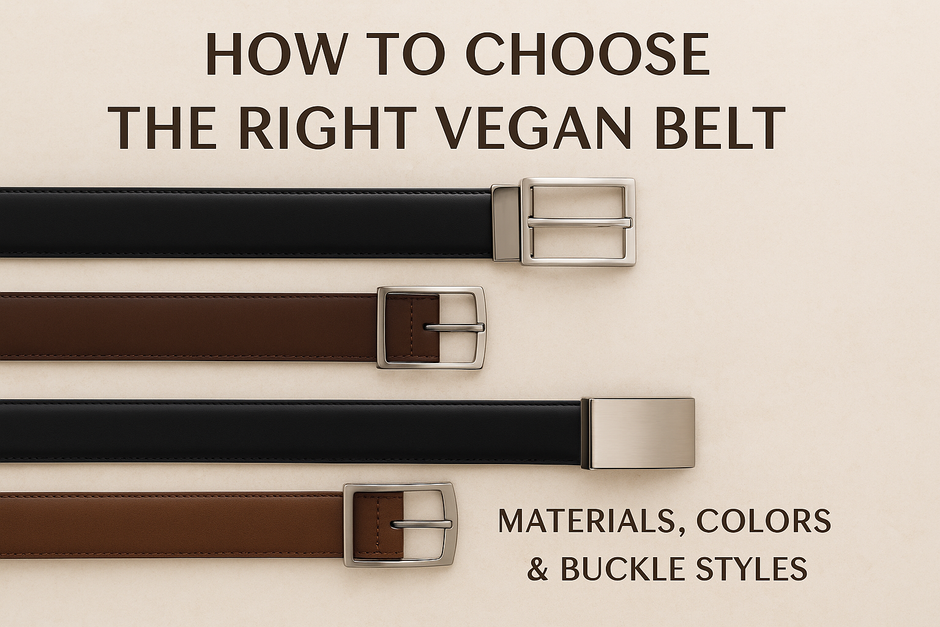
This guide covers all of it. The width and buckle finish that works best with each style of denim. Six complete jeans-and-belt outfit combinations from Saturday morning to Friday night. The colour pairings that always work and the ones that always clash. And a practical approach to building a small vegan belt collection that covers every denim situation you will walk into.
With dress trousers, the belt is usually hidden under a jacket or tucked behind a sweater. It is functional more than it is visible. But jeans are different. Jeans are almost always worn with the waistband visible. A tucked tee, a tucked button-down, an open jacket, a pulled-up hoodie — in every configuration, the belt is on display. It is not just holding the jeans up. It is the centrepiece of the outfit's midsection, the one piece of hardware that draws the eye and anchors everything above and below it.
Denim also has more texture, weight, and visual personality than dress fabric. It has character. Fading, whiskering, selvedge edges, contrast stitching — jeans come loaded with visual information. The belt needs to have enough presence to hold its own against all of that texture without being overwhelmed by it. A flimsy, thin belt disappears against the visual weight of denim. A vegan belt with the right width, the right buckle, and the right colour engages with the denim and creates a dialogue between the two.
This is the core principle of styling a belt with jeans: the belt should match the weight and personality of the denim. Heavier, more textured jeans can handle a more substantial belt. Cleaner, darker jeans pair better with a more refined belt. The rest of this guide is that principle applied to every specific situation.
Belt width is the single biggest factor in whether a belt with jeans looks right or wrong. Jeans have wider belt loops than dress trousers. That is a design fact that matters more than most people realise, because a belt that does not fill the loop looks lost, and a belt that barely squeezes through looks forced. The sweet spot for most denim is 33mm to 38mm, which is wider than a dress belt but narrower than a full work belt.
The width also needs to match the visual weight of the denim itself. Slim, dark jeans have a cleaner, more tailored energy. They pair best with a 33 to 35mm belt that echoes that streamlined feel. Relaxed, faded, or wide-leg jeans have more volume and visual weight, so they pair better with a 35 to 40mm belt that can anchor all that fabric. Going too narrow with heavy denim makes the belt look like an afterthought. Going too wide with slim denim makes the belt look like it belongs to a different outfit.
| Denim Style | Ideal Belt Width | Why It Works |
|---|---|---|
| Slim / Skinny | 30–35mm | Matches the tailored, streamlined silhouette without overwhelming it |
| Straight Leg | 33–38mm | The versatile middle ground — enough presence without heaviness |
| Wide Leg / Relaxed | 35–40mm | Anchors the volume of the fabric and defines the waistline |
| Dark Raw / Selvedge | 33–35mm | Clean denim calls for a clean belt — refined width, refined finish |
| Distressed / Vintage Wash | 35–40mm | The texture of the denim can handle a more substantial, characterful belt |
Here is a quick physical test. Thread the belt through one of the jeans' belt loops. If the belt fills about 70 to 90 percent of the loop height, the proportions are right. If the belt rattles around in the loop with visible space above and below, it is too narrow. If you have to force it through, it is too wide. Most jeans belt loops are designed for 35 to 40mm belts, which is exactly why dress belts (typically 25 to 30mm) look proportionally wrong with denim.
Belt colour with jeans is more forgiving than belt colour with dress trousers, but there are still combinations that look considered and combinations that look accidental. The good news is that the rules are simple and the number of winning combinations is large enough that you are never stuck.
The foundational principle is contrast. You want enough difference between the belt colour and the denim colour that the belt reads as a distinct element rather than blending into the jeans. A dark brown belt with dark blue jeans creates a warm, natural contrast that works in almost every setting. A black belt with black jeans creates a tonal, monochrome effect that looks sharp when intentional. A cognac or tan belt with medium-wash denim creates the classic casual combination that has been working for decades and shows no signs of stopping.
The combinations that cause problems are usually tonal mismatches rather than colour clashes. A medium brown belt on medium-wash jeans can look muddy because the tones are too similar and the belt does not separate from the denim. A very light tan belt on very light jeans creates the same issue. When the belt and the denim are in the same colour family at the same depth, neither one pops. One of them needs to be clearly darker or lighter than the other.
| Denim Colour | Best Belt Colours | Avoid |
|---|---|---|
| Dark Indigo / Raw | Dark brown, cognac, black, espresso | Navy or dark blue — blends into the denim |
| Medium Wash | Tan, cognac, warm brown, black | Medium brown at the same depth as the denim |
| Light Wash / Bleached | Dark brown, espresso, black, cognac | Very light tan — disappears into the denim |
| Black Denim | Black (tonal), dark brown (contrast), charcoal | Light brown or tan — too much contrast, looks mismatched |
| White / Off-White Denim | Cognac, tan, warm brown, natural | White or cream — zero contrast, belt vanishes |
| Grey Denim | Black, charcoal, dark brown, burgundy | Mid-grey — blends tonally |
If you want a single combination to memorise, this is it. A dark brown or espresso belt with dark indigo jeans works in virtually every setting from smart casual dinner to Saturday morning errands. The warm brown against the cool blue creates a natural colour contrast that looks considered without looking forced. It is the default pairing for a reason: it never misses.
The principles above give you the framework. These six combinations give you the application. Each one is built around a specific denim style and a specific setting, from the most casual to the most dressed-up version of jeans and vegan leather belt you can pull off. Use them as templates and swap in your own pieces where it makes sense.
This is the combination that gets you from coffee to dinner on a Saturday without changing anything. Straight-leg or relaxed jeans in a medium wash, a white or grey crew-neck tee tucked in at the front (the French tuck counts), and a warm brown belt in the 35mm range with a brushed buckle. Clean trainers or suede loafers complete it.
The belt is doing a specific job here. It defines the waistline where the tuck meets the denim, which gives the outfit a visual anchor point. Without the belt, a tucked tee into mid-wash jeans can look unfinished. With the belt, the same outfit looks intentional and relaxed in equal measure.
This is the outfit that proves jeans can work in a smart casual professional setting. Dark indigo or raw denim in a slim or straight cut, a structured blazer in navy, charcoal, or camel, and a dark brown or black belt with a polished or brushed chrome buckle. Oxford shirt or knit polo underneath. Leather shoes or clean minimal trainers.
The belt matters more here than in any other denim outfit because it sits at the exact point where the formal world (the blazer) meets the casual world (the jeans). A belt that leans too casual, too thick, or too rough breaks the illusion that these two worlds were meant to coexist. A refined belt in the 33 to 35mm range with clean hardware bridges the gap seamlessly.

The wider the jeans, the more real estate the belt has to play with. Wide-leg or barrel-cut denim gives a statement belt room to breathe and be seen. A slightly wider belt in the 38 to 40mm range with a larger brushed gold or antique brass buckle creates a focal point that structures the volume of the fabric around it. This is the look that has dominated street style for the past three seasons and shows no signs of slowing down.
The key to making this work without tipping into costume territory is simplicity everywhere else. A fitted knit top, a simple tee, or a structured crop that tucks cleanly into the waistband. The belt carries the personality. Everything else provides the canvas.
Black jeans with a black belt is a tonal combination that is harder to execute than it sounds. When the strap, the denim, and everything around them are the same colour, the buckle becomes the only point of contrast in the entire midsection. That makes the buckle finish the most important decision in the outfit.
A polished chrome or brushed silver buckle introduces a cool metallic break that catches light and gives the eye something to land on. A matte black buckle keeps the monochrome unbroken, which is sleeker but demands a more intentional overall outfit to avoid looking like a uniform. Both work. The choice depends on whether you want the belt to punctuate (silver) or disappear (matte black).
This is the outfit combination that gets more compliments per effort invested than any other jeans-and-belt combination. A well-fitting button-down shirt, fully tucked into mid-wash or dark jeans, with a belt that ties the colour temperature of the outfit together. It is the look that says "I care about this, but I did not overthink it," which is the exact message most people want their clothes to send.
The belt colour should coordinate with the shoes, following the classic matching rule. Brown belt, brown shoes, blue or white shirt, jeans. It is a formula because formulas work. The buckle should be understated, a clean frame buckle in brushed silver or polished chrome that punctuates without shouting.
Double denim is back and it is no longer a punchline. The trick is wearing two different shades of denim, not matching, and using the belt as the visual dividing line between the two pieces. A darker denim jacket over lighter jeans, or vice versa, with a belt that separates and anchors the two halves. The belt is doing more work here than in any other combination because it is the only non-denim element in the entire outfit's midsection.
A belt in a contrasting colour, cognac or warm brown against blue denim, or black against grey denim, creates the visual break the outfit needs to read as two separate garments rather than one continuous denim jumpsuit. The buckle should have enough presence to hold its own against twice the denim texture, so a slightly larger or more characterful buckle works better here than a slim minimalist one.


Denim is inherently casual, which means the buckle finish you choose with jeans can be more relaxed than what you would wear with dress trousers. But "more relaxed" does not mean "anything goes." Certain finishes harmonise with the texture and colour of denim better than others, and choosing the right one elevates the entire pairing.
| Buckle Finish | Works Best With | The Vibe |
|---|---|---|
| Brushed Silver | All denim — the universal finisher | Understated, refined, works in every setting |
| Polished Chrome | Dark denim, black denim, blazer combinations | Sharper, dressier. The smart casual choice. |
| Brushed Gold | Medium wash, light wash, warm-tone tops | Warm, editorial. A step above the default. |
| Antique Brass | Vintage wash, distressed, wide-leg denim | Heritage, characterful. The denim purist's pick. |
| Matte Black | Black denim, monochrome outfits, dark palettes | Modern, minimal, current. The stealth option. |
| Gunmetal | Grey denim, dark indigo, charcoal tops | Contemporary edge without the harshness of chrome |
If you had to pick one buckle finish to wear with jeans for the rest of your life, brushed silver is the answer. It has enough warmth to work with brown straps and enough coolness to work with black. It catches light without being flashy. It reads as refined without reading as formal. It is the finish that never clashes with any denim shade, any top colour, or any shoe style. Brushed silver is to belt buckles what dark indigo is to jeans: the default that never stops working.
One finish that does not work well with denim and rarely gets called out: high-gloss gold. It reads as too formal, too flashy, and too dressy against the inherent casualness of jeans. Brushed gold is fine because the matte texture brings it down to casual territory. But a shiny, polished gold buckle on denim looks like a luxury brand logo belt, which is a specific look that most people are not going for. If you are, more power to you. But if you are not, brushed finishes are always the safer play with jeans.
If you wear jeans regularly, and statistically you almost certainly do, having the right small collection of vegan belts means you are never caught improvising with the wrong one. You do not need ten belts. You need three. And if you choose the right three, they will cover every denim situation from lazy Sunday to client dinner.
A brown or cognac vegan belt, 33 to 35mm wide, with a polished silver or polished chrome frame buckle. This is the belt you will reach for five days out of five. It works with every denim shade except black. It works with white tees, button-downs, knits, and blazers. It coordinates with brown shoes and boots without requiring an exact match. It is the most versatile single belt you can own for a jeans-heavy wardrobe.

A black vegan belt, 33 to 35mm wide, with a polished silver or matte black frame buckle. This covers black jeans, very dark indigo, and any denim outfit that leans toward evening or monochrome territory. It also doubles as a smart casual dress belt with dark trousers when you need it to, making it the most dual-purpose belt in the collection.

A vegan leather belt that adds character. Slightly wider (35 to 38mm), with a buckle that has a bit more personality, perhaps polished silver, antique brass, or a slightly larger frame. This is the belt you reach for when the outfit needs a punctuation mark rather than a full stop. It works with wide-leg denim, vintage washes, weekend outfits, and any time you want the belt to be noticed rather than just present.

Jeans are harder on vegan leather belts than any other trouser. The denim is thicker, the belt loops are sturdier, and the friction from a heavier fabric wears on the strap surface faster. If you have ever noticed that your belt with jeans looks more worn than the same belt with dress trousers after the same number of wears, the denim is why. The texture grinds against the strap every time you sit, stand, bend, or move.
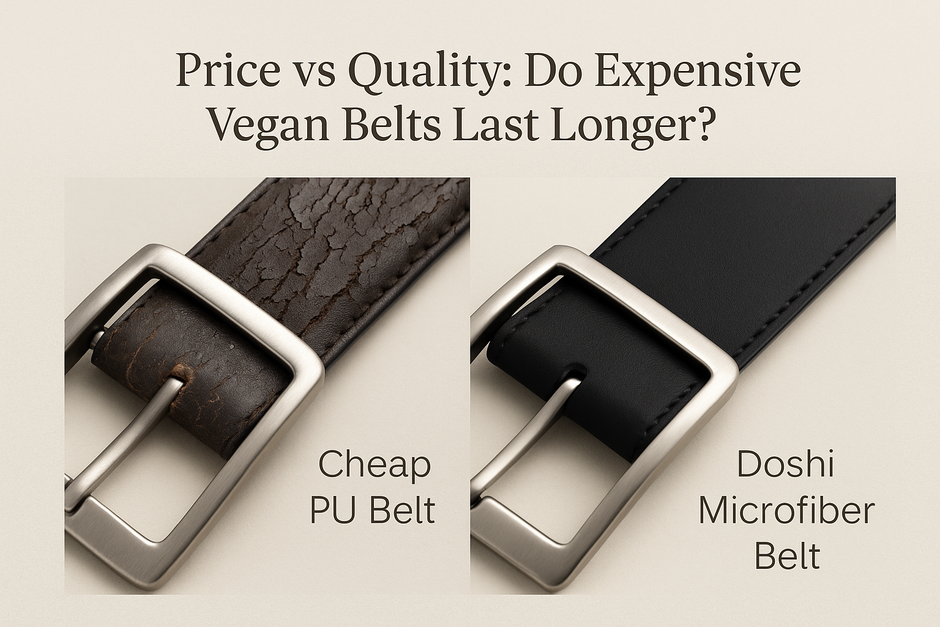
This is where material quality stops being a nice-to-have and starts being the thing that determines whether your belt lasts six months or six years. Cheap PU belts crack and peel fastest with denim because the rough texture accelerates the surface breakdown. Even mid-range leather belts can develop dry spots and cracking along the loop contact points if they are not conditioned regularly.
Premium microfiber vegan leather handles the demands of denim better than most people expect. The dense fibre construction resists the surface abrasion from thick denim loops, maintains its colour without dye transfer, and does not crack or peel under the repeated stress of daily wear with heavy fabric. Paired with solid stainless steel hardware that will not tarnish from the moisture and friction of all-day wear, it is a combination built for the reality of how jeans are actually worn: hard, often, and without a lot of pampering.
This is the design philosophy behind every Doshi belt. Materials that perform under the conditions your wardrobe actually puts them through, not just the conditions they look good under on a shelf. Because a belt with jeans is not a special occasion pairing. It is an every-day pairing. And every-day demands every-day durability.